Author name: DayofD

Blog

2025: A Year of Accomplishments: Days of Dialogue – End-of-Year Reflection

In a year marked by urgency, uncertainty, and division, Days of Dialogue continued to do what it does best: create space. Not just for conversation—but for breath, for listening, and for being heard. Because in times like these, dialogue isn’t extra. It’s essential. Throughout 2025, we partnered with communities, schools, faith leaders, and organizations to hold conversations that mattered—conversations rooted in respect, curiosity, and care. With California Science Center, we centered youth voices, making room for what young people are carrying and what they are ready to change. At Pepperdine University, students modeled what becomes possible when we stop debating and start listening to understand. In partnership with Black Women for Positive Change, we leaned into the future—exploring how artificial intelligence intersects with ethics, equity, safety, and belonging. Through Dialogue Echo, we extended those conversations beyond the room, weaving reflection into action and action into community. We honored culture, history, and truth during AAPI Heritage Month, and gathered in resilience for Juneteenth—celebrating freedom while strengthening collective voice. With YMCA of Metropolitan Los Angeles and Kids Managing Conflict, young people practiced something powerful: how to speak up without shutting down. Our work with Move LA amplified community voices in climate justice conversations—connecting policy to lived experience. And with the Empowerment CongressMinisters Dialogue, faith leaders came together not just to talk, but to lead with courage and care. Across every circle, one truth echoed clearly: people heal when their stories are met with respect. In dialogues confronting hard history—like the Chinese Massacre of 1871—we faced the past honestly, because repair begins when truth is spoken out loud. At our Third Annual Fall Luncheon, we strengthened the relationships that make this work possible—across backgrounds, roles, and generations. This work required listening.It required slowing down.It required choosing connection over assumption—again and again. To our facilitators: thank you for holding space with skill, integrity, and heart.To our partners and supporters: thank you for believing that dialogue can move us forward. As we look ahead, our commitment remains the same.Let’s keep the conversation going. If your community, school, or organization is ready, Days of Dialogue is here.  

Blog

From Conversation to Connection to Change

By: Anne Sawyer Reflections on a Year of Dialogue, Courage, and Community This year, across California, people came together in the spirit of listening — not to debate or persuade, but to understand. In temples and museums, city halls and classrooms, communities sat in a circle and found what’s been missing in so many public spaces: space itself — to speak, to feel, and to heal. From Venice to Long Beach to Los Angeles, the stories shared through Days of Dialogue revealed a profound truth: even in times of tension, grief, and division, people are ready to reach across differences when they are invited into spaces that honor their humanity. 💬 What Dialogue Made Possible At the California Science Center, staff gathered to talk about fear, belonging, and resilience following ICE raids near their workplace. They described anxiety, exhaustion, and the simple relief of being able to speak openly: “I’m not alone.” “It was a good space to get some things out.” These dialogues reminded participants that emotional safety begins with being seen — and that resilience is not about staying strong, but recovering together. At the Open Temple in Venice, a Shabbat gathering became a moment of collective reckoning. Two years after the war began, congregants reflected on pain, faith, and the possibility of compassion across divides: “Why do we have to be on one team or another? Why can’t we have compassion for everyone?” Dialogue here was sacred — a form of prayer through presence. In Los Angeles’ Chinatown, a conversation remembering the 1871 Chinese Massacre brought forward hidden histories and collective truth-telling. Participants spoke about how silence erases, and storytelling restores: “People would care more if they knew more.” “Healing begins with acknowledgment.” From these moments — of vulnerability, reflection, and courage — came community healing and renewed commitment to teach history truthfully and live it more consciously. 🌎 A Year in Motion In 2025, Days of Dialogue facilitated dozens of community conversations with over 500 participants — from city leaders to students, from faith communities to cultural institutions. Each dialogue reminded us that empathy is learned through encounter, and that every person’s story — when heard — helps build a more just and compassionate society. Together with partners like The California Science Center, Open Temple, and Move LA, we have built not just conversations, but connection — the kind that transforms communities from the inside out. 🌱 Looking Ahead In 2026, we will continue this work — expanding dialogues around: Democracy & Belonging AI & Ethics in Society Healing Across Histories Community Resilience & Trust-Building We invite you to be part of it. If your organization, school, or congregation is seeking to navigate tension, build trust, or simply bring people together — we’re here to help you hold the conversation that matters most. 👉 [Request a Dialogue] or [Partner with Us] ✨ Voices from the Circle “Talking is a way of de-escalating what one is feeling.” “Every harm can be seen as an opportunity for healing.” “Older people have a lot of education — from living. It’s shameful not to use that wisdom.” “There are always people to the left and right of center — but not being extreme gives people a chance to feel safe to talk.” “Never again is now.” “It’s important to remember that we are not alone.” ❤️ With Gratitude To every facilitator, partner, and participant who joined us this year — thank you. You helped keep dialogue alive in a time when silence too easily takes its place. Because of you, our communities are stronger, our stories are heard, and our shared future is brighter. Days of Dialogue Creating space for understanding since 1997.

Blog

Chinese Massacre 1871 Dialogue

By: Brett David Louie Two weeks ago, Days of Dialogue was able to host one of the most impactful and formative dialogues that I have been a part of. We collaborated with Rev. Frank Wulf and the La Plaza United Methodist Church to host a dialogue centered around the Los Angeles Chinese Massacre of 1871. Held the day after the October 24 anniversary, we gathered in El Pueblo to remember lives lost, to name the truth that at least 18 Chinese Angelenos were killed in what historians recognize as one of the largest mass lynchings in United States history, and to ask what repair and relationship look like in our city today. With nearly 20 individuals present for the event, they were not only able to address the questions through intentional dialogue, but also carry the conversation into action! We opened with a historical look at the events of that tragic night. From breaking down how this tragedy came to be through economic insecurity and racial tensions, not dissimilar to what is seen today, to descriptions of the lynchings taking place, and even a prayer from our hosts, the history section of the agenda certainly provided insights into the massacre. The intimate setting of being where the massacre first started helped to elevate the gravity of the situation, and allowed for participants to feel the weight of the address. Afterward, we moved into small dialogue groups. Participants reflected on Los Angeles history and shared memory, intersectional bridge building, combating racism, and Asian empowerment. The conversation was honest and nuanced. While we had a diversity of ethnicity, background, fiscal status, and age, there was plenty of consensus around how important this space truly was. Younger individuals felt “safe to open up about [their] lack of knowledge” on the history of the event, and older individuals “…wished they had learned about this, so they could have taught it to their children while growing up.” AAPI attendees found intersectional empathy and comfort with the shared experiences of others, and the all too familiar discussion of socioeconomic status impacting politics returned. Deep, diverse conversation, for a deep, diverse group. There was significant outrage directed at the fact the Chinese Massacre of 1871 is not taught in schools, and worry regarding the current political climate outside our doors. Familiar patterns of bigotry were all too easy to gesture to, and it was evident participants needed this space to express these feelings. One of the participants mentioned that he, “Could clearly see the signs of a mob, especially for such a massive group to target a small section of the LA populace. I’ve seen this same kind of technique used in the wake of the Civil Rights movement.” Having an expert, historical opinion present at the dialogue elevated the conversation, and certainly allowed for an easier time in seeing the implications and connections. While emotions ran high due to the nature of the dialogue, our facilitators were able to focus the energy into constructive conversations. People told the truth about harm, and they also named hopes and next steps. “We need more of these facilitated community spaces, so that we can continue to share and pass down this knowledge to next generations, and prevent another massacre from happening again.” By the end, every table offered one insight and one action, so that we left not only with memory, but with momentum. We must ‘build unity across racial communities, and our existence is resistance.’ We are grateful for the generous hospitality of La Plaza United Methodist Church, for Rev. Wulf’s partnership, for our facilitators who kept the space steady and equitable, and for every attendee who showed up ready to listen, speak, and build. Thank you to community partners and neighbors who shared the invitation, brought friends, and made room at the table. From pain to partnership, from memory to movement, this is what it looks like when Los Angeles chooses each other. In the words of one of the attendees, “I hadn’t realized how much impact one person could have in preserving collective memory and community experience.” You can be that very person who not only helps to carry the conversation,  but invites others to the table as well. We hope to collaborate with Rev. Wulf and the La Plaza United Methodist Church soon, and cannot wait to see you at another dialogue soon!

Blog

Empowerment Congress Ministers Dialogue: Faith Leaders in Action

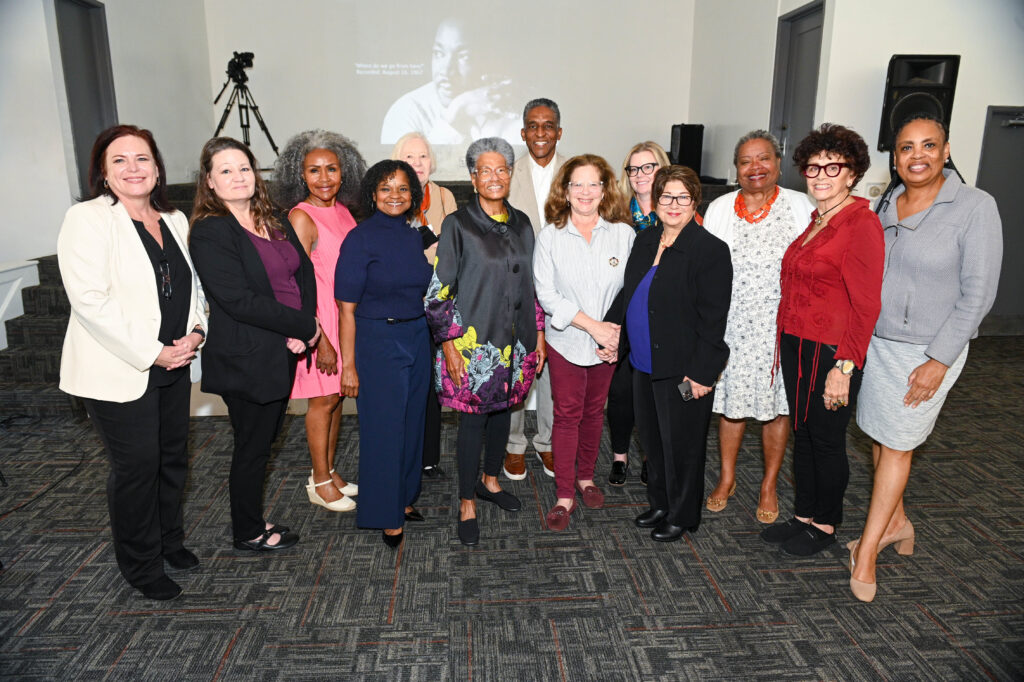
🌟 Empowerment Congress Ministers Dialogue: Faith Leaders in Action 🌟 In August, the Empowerment Congress hosted a powerful Ministers Dialogue focused on the critical role of religious leaders and clergy members in today’s sociopolitical climate. Civic leaders, clergy, and community members came together in heartfelt dialogue, engaging questions such as: What can be done—individually and collectively—right now to strengthen communities? How might past solutions be adapted for today’s challenges? How can faith communities reconcile with those who have been hurt by the Church? How can more people across Los Angeles, the nation, and the world be brought into this work? The conversations were moving and inspiring. Participants shared prepared resources, personal stories, and courageous perspectives that challenged and uplifted the group. At times, the dialogue moved participants to tears, underscoring the depth of solidarity, vulnerability, and love in the room. The event affirmed the power of faith leaders working together with courage and vision. By sparking honest conversations and motivating one another into action, participants highlighted the importance—and urgency—of clergy as leaders in civic engagement and social change. The Empowerment Congress extends heartfelt gratitude to Gethsemane Christian Love M.B. Church for hosting this meaningful gathering, and to every participant who contributed their voice, wisdom, and hope. This dialogue was not only important, but imperative—for Los Angeles and for communities everywhere.

Blog

Move LA: Community Voices on Climate Justice

🌍 Community Voices on Climate Justice 🌍 Over the past two weeks, Days of Dialogue, in partnership with Move LA, convened two powerful conversations on climate justice and the future of clean energy. From CSU Los Angeles to the Port of Long Beach, diverse community members, students, labor leaders, policymakers, and advocates came together to share their stories, their concerns, and their visions for an equitable transition to a cleaner, more sustainable future. ✨ Key themes that emerged across both dialogues: Equity in Transition – Ensuring frontline communities most impacted by pollution and climate change are centered in solutions. Workforce & Opportunity – Lifting up pathways for good jobs, training, and union partnerships in the clean energy economy. Community Power – Recognizing the wisdom and lived experience of residents in shaping climate policies and projects. Urgency & Hope – Balancing the challenges of climate change with the opportunities to innovate, collaborate, and lead with justice. These dialogues reminded us that tackling the climate crisis is not only about technology and policy, but also about justice, voice, and connection. Together, we can imagine and build a future where both our planet and our communities thrive. 💡 Thank you to Move LA, our hosts, facilitators, and every participant who shared their truth. Your voices are shaping the path forward. #ClimateJustice #DaysOfDialogue #MoveLA #CommunityVoice #CleanEnergy

Blog

YMCA Los Angeles & Kids Managing Conflict Youth Dialogue

Through our Youth Dialogue program with the YMCA Los Angeles and Kids Managing Conflict, students explored how to communicate, resolve disagreements, and work toward solutions with empathy and respect. This experience gave students the chance to grow in meaningful ways, including: Gaining practical skills in active listening, conflict resolution, and collaborative problem-solving. Building confidence in expressing their ideas and perspectives in a safe and supportive environment. Learning how to turn differences into opportunities for understanding and growth. Strengthening leadership skills that empower them to create positive change in their schools and communities.

Blog

Community Explores AI’s Impact in Dialogue Series Addressing Equity, Education and Empowerment By: Sharon Shelton

In a groundbreaking session hosted by Positive Change Foundation in collaboration with Black Women For Positive Change brought together a diverse group of participants to reflect on the growing impact of artificial intelligence (AI) in our daily lives. The dialogue offered an opportunity to explore both the emotional and ethical implications of AI—particularly within underserved communities. Days of Dialogue continues to provide a platform and skilled facilitators to led the conversation in exploring how AI is reshaping our world—and how communities can prepare and respond. Dr. Stephanie Myers, National Co-Chair and Dr. Barbara Reynolds, Chair A.I. Committee Black Women For Positive Change emphasized the importance of understanding AI’s basic functions and its potential to transform sectors like education and healthcare. From self-driving cars to AI-generated content, the technology is rapidly evolving—and so must our approach to access and equity. Community voiced their perspectives, sharing excitement about AI’s capabilities and raising important concerns around equity, ethics, the digital divide, funding gaps, and the risk of AI perpetuating bias. Participants advocated for increased investment in AI education and training, particularly for historically marginalized groups. “Access to AI must not become another barrier,” one attendee noted. Dr. Denise Turley, dialogue participant and AI Advisor emphasized the necessity of fact-checking and critical thinking in a world where AI-generated misinformation is on the rise. The conversation called attention to several key themes: Equitable Access: Ensuring underserved communities have access to AI education, tools, and opportunities. Bias and Misinformation: Combating embedded bias in AI systems and promoting media literacy. Healthcare Innovation: Exploring AI’s potential to expand diagnostic accuracy and improve self-care access. Community Collaboration: Using dialogue to elevate shared understanding and develop actionable solutions. Participants left energized and committed to continue increasing understanding and learning  by exchanging ideas to deepen these critical conversations. Mark your calendars for the September 17th A.I. training workshop hosted by our partner The Positive Change Foundation in collaboration with Black Women For Positive Change.                           BlackWomenForPositiveChange.org

Scroll to Top