Blog

Your blog category

Blog

Conversation Over Conflict: Leaders Gather to Reclaim Nonviolence as a Strategy for Change – From LA Focus News

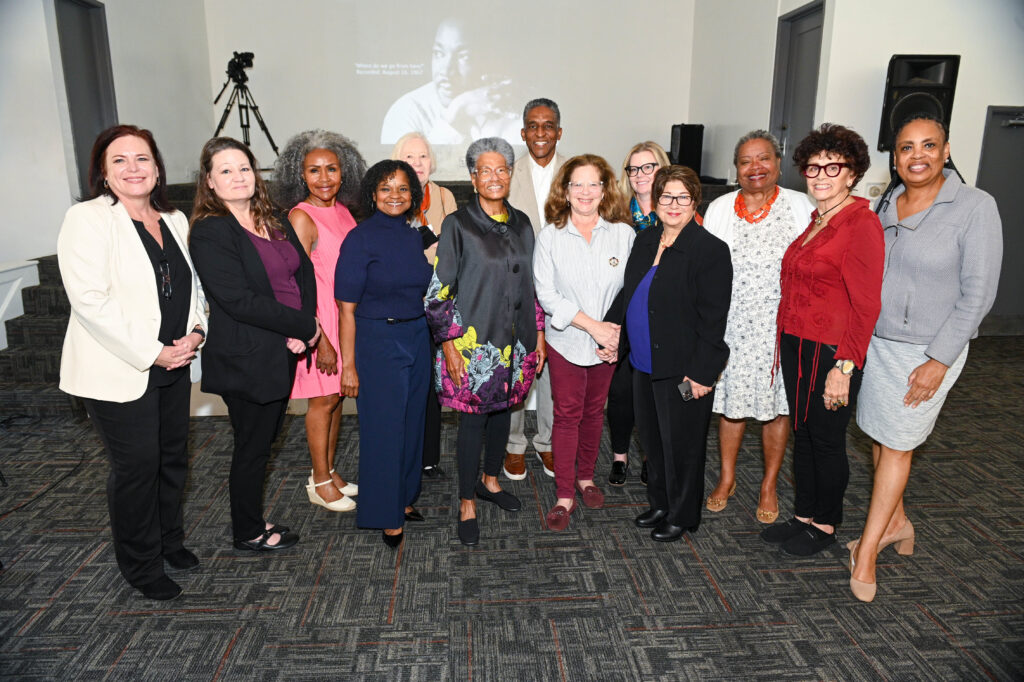
by Anja Williams At a moment when images of violence dominate the news cycle — abroad and at home — a group of nearly 90 community members, faith leaders, and civic organizers chose a different kind of gathering. On April 8th, just four days after the 58th anniversary of the assassination of Dr. Martin Luther King Jr., they came together at Center of Hope Community Church in Inglewood, California — not to protest, not to demonstrate, but to talk. The occasion was part of Institute of Non-Violence Los Angeles (INVLA)’s Season of Nonviolence — an ongoing leadership dialogue series calling community leaders to examine and approach their work through the lens of nonviolence. Setting the tone, INVLA dialogue facilitator and host Sharon Sheldon grounded the room in the gravity of the occasion, underscoring what King demonstrated: that nonviolence is not a sentiment. It is a method. The full idea is nonviolent direct action. It means seeing what needs to change, naming it, and demanding it — with the courage to stand in the discomfort of stepping out and the backlash that may follow. Nonviolence governs the response to that backlash with the refusal to retaliate and the resolve to absorb what comes without becoming what you are fighting against. King’s letter from a Birmingham jail cell to clergy who agreed with him in principle about injustice but urged him to wait for it to manifest— modeled in the very act of letter writing exactly what he was calling others to do. Unapologetically create change through nonviolence. That method worked against the British salt monopoly that burdened the poor in Gandhi’s India. It worked against Jim Crow in King’s America. It works now —because it is grounded in love. And love doesn’t have an expiration date.  In his book We Are the Leaders We Are Looking For, Dr. Eddie Glaude — Princeton professor of African American studies and religion — makes the case plainly: we cannot wait for another King. The leaders this moment demands are already here. We are them. And we need each other. Nonviolent direct action only works in community — because no single person has the full picture, and no single voice can name every form of harm or carry every call for change. That is why dialogue matters. When diverse voices — generationally, racially, culturally, religiously —come together in the same room, something happens that cannot happen alone. People build on one another’s ideas. They name ills that might otherwise go unseen. They collaborate on solutions and identify what they are calling forward. They ensure that no part of the community is left out of the picture. The more complete the picture, the more honest and powerful the response. INVLA creates that space. It is not the organization that marches or legislates — it creates the conditions that make those things possible. Whether corrective action needs to be directed inward toward community and the culture or outward toward institutions and systems, it must be rooted in collective awareness first. We cannot strategize around a problem the community hasn’t fully named. We cannot organize around an injustice the community hasn’t collectively seen. The tools exist. The method has been proven. The leaders are already here. That is what April 8th was building toward. Not the finish line. The starting point. Featured in LA Focus News

Blog

Dialogue, Trust, and the Work of Peacebuilding. Member Spotlight: Anne Sawyer

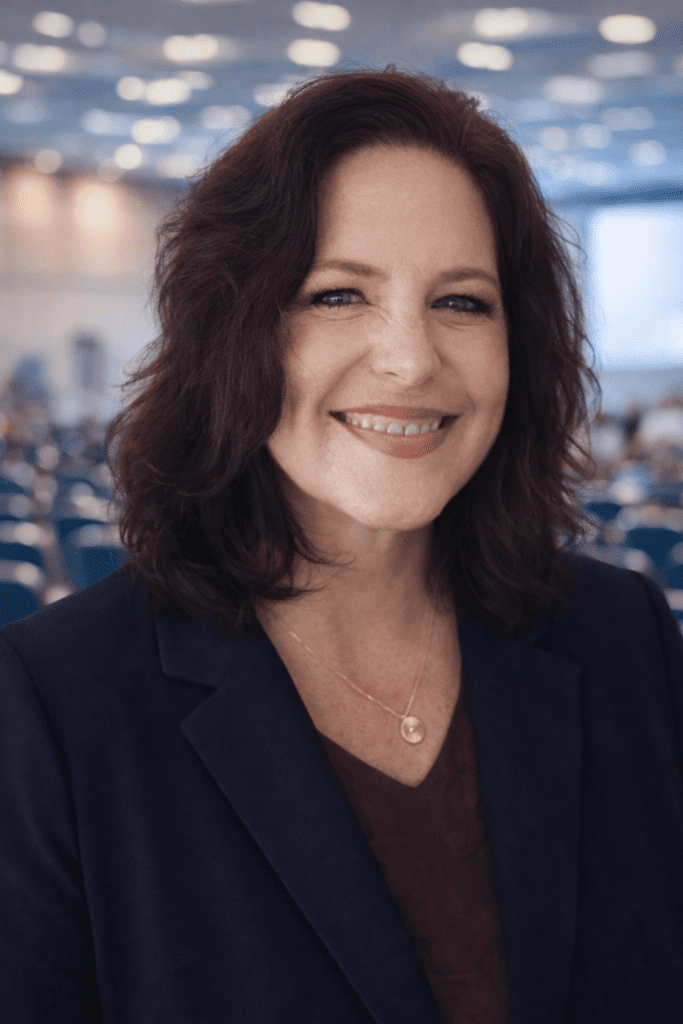
Anne Sawyer learned early that conflict was not something distant or abstract. Growing up in California in a family of lawyers, she was surrounded by disagreement, negotiation, and strong perspectives. As a child, she did not yet have the tools to make sense of those dynamics, but she felt their presence deeply. “Curiosity and fear of conflict was inhabiting anything I could see,” she recalls. Over time, that initial fear began to shift into something else. What started as discomfort evolved into a deeper curiosity, not just about individual disagreements, but about the systems that shape them. Her professional path did not begin in peacebuilding. Instead, it started in the legal world, where she worked first as a legal secretary, then as a paralegal, and eventually as a law firm administrator. For 15 to 20 years, she built a career grounded in structure, procedure, and the mechanics of legal conflict. But something about the process felt incomplete. The systems were designed to resolve disputes, yet they did not always create understanding. A turning point came when she became connected with Pepperdine University through a private sector project. There, she was introduced to mediation. “I dove right into this new field of conflict resolution,” she says. What she found was not just a new career path, but a language for something she had been navigating her entire life. “In a way, I’ve been mediating my whole life.” Anne went on to become deeply involved in the field, eventually serving as Executive Director of the Southern California Mediation Association (SCMA) and past president of Kids Managing Conflict, which is the foundation of SCMA. During that time, her work continued to evolve beyond formal roles. “From there I connected with Days of Dialogue and Avis Ridley Thomas to facilitate civic dialogues as part of my volunteer practice,” she says. Her experience expanded across mediation, facilitation, and leadership, always circling back to one core idea: conflict is not something to avoid, but something to engage with thoughtfully. Her approach was further shaped by personal reflection. “I wasn’t given the skillsets as a child on how to deal with conflict,” she explains. That realization became a driving force in her work. Rather than focusing solely on resolving disputes, she began to emphasize the importance of creating environments where people feel safe enough to have honest conversations. For Anne, peacebuilding is about the conditions that make understanding possible. “Peace is the presence of trust, dignity and the ability to communicate.” Today, her work sits at the intersection of leadership, dialogue, and mediation. After years of traditional mediation practice, her career shifted again during the COVID-19 pandemic. Like many in her field, she found the isolation and intensity of that period challenging. At the same time, the murder of George Floyd sparked a wave of public dialogue and community engagement. Anne’s connection to this work, however, began much earlier. “I was involved with Days and INVLA at the beginning of my mediation career,” she explains. When the pandemic hit, that involvement deepened. “It accelerated and I began consulting Days in 2020 when we needed to transition the dialogue process online.” What followed was an intense period of adaptation and growth. “I moderated over 200 virtual dialogues in 2020–2021 and that has become just another pathway to the process,” she says. That period reinforced her belief that structured dialogue spaces are essential, especially in moments of crisis. It also pushed her to think more broadly about systems and scale. She began exploring how technology, including AI, could intersect with conflict resolution, and how large-scale issues like homelessness could be approached through dialogue and systems thinking. Her current work reflects that evolution. She now runs a consultancy practice focused on leadership and facilitation, and recently launched a new initiative called the Affinity Alliance. The passion project of hers aims to build a community for facilitators, mediators, and leaders, offering resources and shared spaces for those doing this work. At its core is a belief that peacebuilding cannot happen in isolation. It requires networks, collaboration, and sustained support. The day-to-day reality of her work is anything but predictable. “No two days look the same for me,” she says. The challenges shift constantly, requiring flexibility and responsiveness. “I’ve learned to pivot.” Whether she is facilitating a dialogue, designing a process, or advising leaders, the ability to adapt is essential. As her work continues to evolve, she is also thinking more expansively about its reach. “I’m increasingly focused on how large-scale systems, like homelessness or emerging technologies, require new forms of dialogue and coordination,” she explains. At the same time, she is candid about the emotional demands of the work. “We are all challenged right now,” she says, referring to peacebuilders and facilitators working in increasingly complex environments. Supporting people through vulnerability requires care, structure, and intention. “Taking care of humans is hard work.” For Anne, this makes collaboration not just beneficial, but necessary. Her approach to facilitation is deliberately open. Rather than imposing rigid structures, she emphasizes the importance of showing up and listening. “You just have to plan to show up and listen and give them the space to be heard,” she explains. This means approaching conversations without predetermined outcomes and creating space for diverse voices. “Anyone can come and have this conversation.” That inclusivity is central to how she understands effective peacebuilding. “They’re imperative and valuable, we need diversity of experiences,” she says, referring to youth, women, and marginalized groups. Without that diversity, dialogue remains incomplete. “You can’t have good dialogue or peacebuilding conversation unless you have all voices.” Her definition of success is not tied to resolution in the traditional sense. Instead, it is rooted in moments of transformation, however small. “I love when I see the light switch on for people,” she says. These moments, when someone reaches a new understanding simply by listening, are what sustain her work. Measuring impact, however, requires a broader lens. Anne looks beyond individual conversations to the larger context. “Watching the news and listening to what is happening, local dynamics, histories, politics,” she explains. Each community is different, and understanding those differences is essential. “No two communities are the same.” For her, it is not just about the people in the room, but the frameworks

Blog

From Season to Practice: LA Leaders Commit to Nonviolence Year-Round

By Sharon L. Shelton and Anja Williams Avis Ridley-Thomas with INVLA  Dialogue Practitioners who facilitated table conversations LOS ANGELES — More than 100 leaders from across Los Angeles County gathered on April 8, 2026, at the Center of Hope for the Season of Nonviolence Leadership Dialogue, a powerful convening focused on advancing nonviolence as a year-round practice for community safety and leadership. Hosted by the Institute for Nonviolence Los Angeles (INVLA) and its Days of Dialogue, the event marked the conclusion of the National Season of Nonviolence (January–April), a period inspired by the legacies of Dr. Martin Luther King Jr. and Mahatma Gandhi. But organizers were clear: this gathering was not about reflection alone—it was about action. “Nonviolence is not a moment. It is a method. It is a leadership practice” emphasized Sharon Shelton, emcee and dialogue practitioner. That message grounded the morning as leaders from public agencies, nonprofit organizations, faith communities, and grassroots groups came together in a shared space to engage, listen, and collaborate. The dialogue featured opening reflections from community and civic leaders, including Avis Ridley-Thomas, founder and Executive Director of INVLA and Days of Dialogue; Pastor Geremy Dixon, Center of Hope, Board Chair of United Faith Coalition and dialogue host, Dr. Breeda McGrath, President of Pacific Oaks College and Children’s School; Rhea MAC of the Empowerment Congress; and Dr. Mark Ridley-Thomas, founder of the Empowerment Congress and former Los Angeles City Councilmember and County Supervisor. Dialogue host and Center of Hope Pastor, Geremy Dixon Together, they emphasized the need for leadership rooted in trust, accountability, and community voice—especially in a time when many communities are facing ongoing challenges related to safety, equity, and opportunity. The dialogue honored the enduring legacies of Dr. King and Gandhi leaders who demonstrated that nonviolence is not passive, but an active and disciplined approach to addressing injustice and building stronger communities. Unlike traditional events, this convening was intentionally designed as a participatory dialogue. Attendees engaged in facilitated small-group discussions, reflecting on what nonviolence means in their daily lives, where challenges exist, and how communities can move forward together. At the heart of the gathering was a powerful idea: dialogue itself is a form of nonviolence. That is why dialogue matters. When diverse voices — generationally, racially, culturally, religiously — come together in the same room, something happens that cannot happen alone. People build on one another’s ideas. They name ills that might otherwise go unseen. They collaborate on solutions and identify what they are calling forward. They ensure that no part of the community is left out of the picture. The more complete the picture, the more honest and powerful the response. Through structured conversation, participants practiced listening across differences, building understanding, and identifying shared solutions. This approach, developed through INVLA’s Days of Dialogue model, positions dialogue as a tool for prevention, relationship-building, and collaborative leadership. Dialogue in action The event also highlighted the continued growth of the Leadership Dialogue Systems Initiative, an effort to embed dialogue into organizations and institutions as a way to strengthen alignment, reduce conflict, and support long-term community impact. As the session concluded, participants shared key insights during a full-group discussion, lifting up themes of trust, connection, and the need for sustained engagement beyond a single gathering. The message was clear: the Season of Nonviolence may end, but the work must continue. INVLA and its partners are now calling on leaders across Los Angeles to take the next step—by joining ongoing dialogue efforts, bringing these practices into their organizations, and committing to nonviolence as a daily leadership discipline. That is what April 8th was building toward. Not the finish line. The starting point. L-R Sharon Shelton Emcee, INVLA Partners – Paul Beck Board Chair  NewGround, Dr. Breeda McGrath President Pacific Oaks College & Children’s School, Avis Ridley-Thomas, INVLA Executive Director, Dr. Mark Ridley-Thomas Empowerment Congress Founder and INVLA Senior Advisor “Nonviolence does not begin with action. It begins with our willingness to come together, to tell the truth about what we see, and to decide–together–what must change and how that change unfolds.“ – Avis Ridley-Thomas, INVLA Founder To learn more or get involved, visit:www.daysofdialogue.org About INVLA Days of Dialogue The Institute for Nonviolence Los Angeles (INVLA) Days of Dialogue convenes cross-sector leaders to advance nonviolence as a strategy for community safety, institutional trust, and collaborative governance through structured dialogue and leadership engagement.

Blog

When Listening Becomes Leadership: Reflections from a Powerful Day of Dialogue

By: Anne Sawyer When Listening Becomes Leadership: Reflections from a Powerful Day of Dialogue On January 21, 2026, SCHARP convened one full day of dialogue on homelessness — two sessions bringing together service providers, advocates, community members, and individuals with lived or proximate experience. It was one of those days where you could feel the weight in the room — and the willingness. Participants didn’t come to argue policy.They didn’t come for a presentation.They came because the work is hard, the systems are complex, and the conversations we need aren’t happening often enough. Here’s what made the day powerful. 1. People showed up informed — and honest. Most participants entered with deep familiarity with homelessness systems. This wasn’t an introductory conversation. It was layered, nuanced, and real. Frustration with fragmentation, burnout, and lack of coordination surfaced quickly — but so did a desire to understand, not blame. 2. Listening shifted the temperature. Across both sessions, the most meaningful takeaway participants named wasn’t “being heard.”It was listening. Slowing down enough to hear how the same system feels from different roles — case manager, community member, advocate, neighbor — changed the energy in the room. Assumptions softened. Defensiveness lowered. Complexity became shared rather than owned by one group. 3. Emotional regulation is not a side benefit — it’s core. Pre-dialogue, many expressed concern that the conversation could become polarized or performative. Post-dialogue, participants described feeling grounded, clearer, and more connected. That shift matters. When people leave feeling steadier rather than more reactive, collaboration becomes possible. 4. Dialogue builds relational infrastructure. Homelessness requires services, funding, and policy reform. Dialogue does not replace those. But dialogue builds something essential underneath them: trust, shared language, and cross-role understanding. Without that relational infrastructure, coordination struggles no matter how much funding or planning exists. 5. There is readiness for more. The clearest signal from the day? People are ready for spaces like this. Not as one-time events, but as ongoing practice. We are now reviewing detailed scribe notes from the tables to identify recurring system themes and areas for continued engagement. What’s already clear is this: When structured well, dialogue is not soft work.It is how systems work. Grateful to everyone who showed up with openness and courage. The conversation — and the commitment — continues.  

Blog

2025: A Year of Accomplishments: Days of Dialogue – End-of-Year Reflection

In a year marked by urgency, uncertainty, and division, Days of Dialogue continued to do what it does best: create space. Not just for conversation—but for breath, for listening, and for being heard. Because in times like these, dialogue isn’t extra. It’s essential. Throughout 2025, we partnered with communities, schools, faith leaders, and organizations to hold conversations that mattered—conversations rooted in respect, curiosity, and care. With California Science Center, we centered youth voices, making room for what young people are carrying and what they are ready to change. At Pepperdine University, students modeled what becomes possible when we stop debating and start listening to understand. In partnership with Black Women for Positive Change, we leaned into the future—exploring how artificial intelligence intersects with ethics, equity, safety, and belonging. Through Dialogue Echo, we extended those conversations beyond the room, weaving reflection into action and action into community. We honored culture, history, and truth during AAPI Heritage Month, and gathered in resilience for Juneteenth—celebrating freedom while strengthening collective voice. With YMCA of Metropolitan Los Angeles and Kids Managing Conflict, young people practiced something powerful: how to speak up without shutting down. Our work with Move LA amplified community voices in climate justice conversations—connecting policy to lived experience. And with the Empowerment CongressMinisters Dialogue, faith leaders came together not just to talk, but to lead with courage and care. Across every circle, one truth echoed clearly: people heal when their stories are met with respect. In dialogues confronting hard history—like the Chinese Massacre of 1871—we faced the past honestly, because repair begins when truth is spoken out loud. At our Third Annual Fall Luncheon, we strengthened the relationships that make this work possible—across backgrounds, roles, and generations. This work required listening.It required slowing down.It required choosing connection over assumption—again and again. To our facilitators: thank you for holding space with skill, integrity, and heart.To our partners and supporters: thank you for believing that dialogue can move us forward. As we look ahead, our commitment remains the same.Let’s keep the conversation going. If your community, school, or organization is ready, Days of Dialogue is here.  

Blog

From Conversation to Connection to Change

By: Anne Sawyer Reflections on a Year of Dialogue, Courage, and Community This year, across California, people came together in the spirit of listening — not to debate or persuade, but to understand. In temples and museums, city halls and classrooms, communities sat in a circle and found what’s been missing in so many public spaces: space itself — to speak, to feel, and to heal. From Venice to Long Beach to Los Angeles, the stories shared through Days of Dialogue revealed a profound truth: even in times of tension, grief, and division, people are ready to reach across differences when they are invited into spaces that honor their humanity. 💬 What Dialogue Made Possible At the California Science Center, staff gathered to talk about fear, belonging, and resilience following ICE raids near their workplace. They described anxiety, exhaustion, and the simple relief of being able to speak openly: “I’m not alone.” “It was a good space to get some things out.” These dialogues reminded participants that emotional safety begins with being seen — and that resilience is not about staying strong, but recovering together. At the Open Temple in Venice, a Shabbat gathering became a moment of collective reckoning. Two years after the war began, congregants reflected on pain, faith, and the possibility of compassion across divides: “Why do we have to be on one team or another? Why can’t we have compassion for everyone?” Dialogue here was sacred — a form of prayer through presence. In Los Angeles’ Chinatown, a conversation remembering the 1871 Chinese Massacre brought forward hidden histories and collective truth-telling. Participants spoke about how silence erases, and storytelling restores: “People would care more if they knew more.” “Healing begins with acknowledgment.” From these moments — of vulnerability, reflection, and courage — came community healing and renewed commitment to teach history truthfully and live it more consciously. 🌎 A Year in Motion In 2025, Days of Dialogue facilitated dozens of community conversations with over 500 participants — from city leaders to students, from faith communities to cultural institutions. Each dialogue reminded us that empathy is learned through encounter, and that every person’s story — when heard — helps build a more just and compassionate society. Together with partners like The California Science Center, Open Temple, and Move LA, we have built not just conversations, but connection — the kind that transforms communities from the inside out. 🌱 Looking Ahead In 2026, we will continue this work — expanding dialogues around: Democracy & Belonging AI & Ethics in Society Healing Across Histories Community Resilience & Trust-Building We invite you to be part of it. If your organization, school, or congregation is seeking to navigate tension, build trust, or simply bring people together — we’re here to help you hold the conversation that matters most. 👉 [Request a Dialogue] or [Partner with Us] ✨ Voices from the Circle “Talking is a way of de-escalating what one is feeling.” “Every harm can be seen as an opportunity for healing.” “Older people have a lot of education — from living. It’s shameful not to use that wisdom.” “There are always people to the left and right of center — but not being extreme gives people a chance to feel safe to talk.” “Never again is now.” “It’s important to remember that we are not alone.” ❤️ With Gratitude To every facilitator, partner, and participant who joined us this year — thank you. You helped keep dialogue alive in a time when silence too easily takes its place. Because of you, our communities are stronger, our stories are heard, and our shared future is brighter. Days of Dialogue Creating space for understanding since 1997.

Blog

Chinese Massacre 1871 Dialogue

By: Brett David Louie Two weeks ago, Days of Dialogue was able to host one of the most impactful and formative dialogues that I have been a part of. We collaborated with Rev. Frank Wulf and the La Plaza United Methodist Church to host a dialogue centered around the Los Angeles Chinese Massacre of 1871. Held the day after the October 24 anniversary, we gathered in El Pueblo to remember lives lost, to name the truth that at least 18 Chinese Angelenos were killed in what historians recognize as one of the largest mass lynchings in United States history, and to ask what repair and relationship look like in our city today. With nearly 20 individuals present for the event, they were not only able to address the questions through intentional dialogue, but also carry the conversation into action! We opened with a historical look at the events of that tragic night. From breaking down how this tragedy came to be through economic insecurity and racial tensions, not dissimilar to what is seen today, to descriptions of the lynchings taking place, and even a prayer from our hosts, the history section of the agenda certainly provided insights into the massacre. The intimate setting of being where the massacre first started helped to elevate the gravity of the situation, and allowed for participants to feel the weight of the address. Afterward, we moved into small dialogue groups. Participants reflected on Los Angeles history and shared memory, intersectional bridge building, combating racism, and Asian empowerment. The conversation was honest and nuanced. While we had a diversity of ethnicity, background, fiscal status, and age, there was plenty of consensus around how important this space truly was. Younger individuals felt “safe to open up about [their] lack of knowledge” on the history of the event, and older individuals “…wished they had learned about this, so they could have taught it to their children while growing up.” AAPI attendees found intersectional empathy and comfort with the shared experiences of others, and the all too familiar discussion of socioeconomic status impacting politics returned. Deep, diverse conversation, for a deep, diverse group. There was significant outrage directed at the fact the Chinese Massacre of 1871 is not taught in schools, and worry regarding the current political climate outside our doors. Familiar patterns of bigotry were all too easy to gesture to, and it was evident participants needed this space to express these feelings. One of the participants mentioned that he, “Could clearly see the signs of a mob, especially for such a massive group to target a small section of the LA populace. I’ve seen this same kind of technique used in the wake of the Civil Rights movement.” Having an expert, historical opinion present at the dialogue elevated the conversation, and certainly allowed for an easier time in seeing the implications and connections. While emotions ran high due to the nature of the dialogue, our facilitators were able to focus the energy into constructive conversations. People told the truth about harm, and they also named hopes and next steps. “We need more of these facilitated community spaces, so that we can continue to share and pass down this knowledge to next generations, and prevent another massacre from happening again.” By the end, every table offered one insight and one action, so that we left not only with memory, but with momentum. We must ‘build unity across racial communities, and our existence is resistance.’ We are grateful for the generous hospitality of La Plaza United Methodist Church, for Rev. Wulf’s partnership, for our facilitators who kept the space steady and equitable, and for every attendee who showed up ready to listen, speak, and build. Thank you to community partners and neighbors who shared the invitation, brought friends, and made room at the table. From pain to partnership, from memory to movement, this is what it looks like when Los Angeles chooses each other. In the words of one of the attendees, “I hadn’t realized how much impact one person could have in preserving collective memory and community experience.” You can be that very person who not only helps to carry the conversation,  but invites others to the table as well. We hope to collaborate with Rev. Wulf and the La Plaza United Methodist Church soon, and cannot wait to see you at another dialogue soon!

Scroll to Top